Translate

Saturday, October 17, 2015

The Dustbowl, or, Lessons Learned from Weather

The dust is everywhere: In my nostrils and eyes and ears and in between my toes. It gets under my door and into my house, making it seem as if I didn’t thoroughly clean the house the week before I left for South Africa. The wind blows as if a storm is coming, yet it’s not raining nearly as frequently or as hard as we would all like and need. Frequently, lightning will light up the sky beyond while only a drizzle or nothing at all falls from the sky. It’s as if the rest of the world wants to storm, but the skies just won’t allow it.
Yesterday and today it finally stormed, and already my skin doesn’t feel as dry.
This is how the weather was when I came to Lesotho a year ago, and while most things about living here don’t surprise me anymore, the dramatics of the weather here almost always astound me. The sun beats down and makes me squint my eyes and think of New Mexican summers visiting the fam. The wind blows so strongly that from a distance it looks like the dust is a low hanging cloud ready to release drops at any moment, but when walking in the midst of it forces you to cover your eyes so the particles don’t get in and make them burn like hell. Most days begin awash in bright, fresh light. Most of them end in awe-inspiring multi-colored sunsets that quickly give way to a sky blanketed in stars. The sky always makes me feel delightfully, refreshingly, small and insignificant.
The weather here is like an outdoor traveling theater troupe, ready to strike and surprise and mystify at any moment.

I wonder what it is exactly that makes me feel so exposed to the elements here. Though it’s significantly more humid in Philly, there are definitely four seasons the same as here, with extremely cold days and boiling hot ones and days full of fresh breeze and rain and wind. Was it the concrete that shielded me before? The tall buildings? The indoor plumbing?  The fans and the air conditioners and the indoor heating systems? Probably all of it.
It’s new for me, this intimate awareness of the land and the weather.  It’s teaching me things too-how the clouds look different when rain is really coming and when they’re just putting on a mask, trying to fool you. How to adjust my daily habits based on the outside world: I didn’t do dishes in the morning in the winter because it was too cold to go outside that early to dump the dishwater on my garden. How much I took water for granted at home.

By now, I’m used to thinking about how to ration my resources on a daily basis-baking less bread and cooking less soup uses less gas, and water that gets used for one thing is almost always reused or simultaneously used for another: washing my hands over my dish basin allows me to soak the dirty dishes in one go, and dirty dish water immediately goes towards watering my (ailing) garden. These things don’t feel very difficult anymore, they just are what they are.

But sometimes, I’ll wake up from a dream where all I did was sit in front of the washing machine while it washed my clothes for me, turned on a faucet anywhere and just watched water come gushing out and cooked a meal without thinking once about how much gas I was using and when I would need to replace the tank next.
Life will be easier in a year, no doubt about it. And I’ll appreciate modern amenities more than ever.

I only hope I don’t end up taking them for granted.


Khotso. 

It's been a year, ya'll.

A Year in the Mountain Kingdom

Well, I’ve been here a year. If I were a baby I would be eating solid food, crawling around eagerly, babbling away in my own language and starting to learn to walk (can you tell I worked in a pre-school?).
I’ve imagined how I would feel around this time throughout my first few months here, made predictions for what I would be dealing with and made lists of personal and professional goals that I hoped to achieve by this marker.
The irony, of course, is that I hardly remember any of them. I realized months ago that very few noticeable changes can be made in a year of teaching, so I probably threw those lists away. And most of the personal goals I made (50 pushups?  No thanks) have dissipated as well. As with all things worth our time, the most profound lessons learned and changes within me and in my school are things that I never actively pursued, but that found me instead. Here are a few of them:

1.   I don’t rush, ever. I used to get to places early on the regular, and nearly always left my house when I planned to. I remember having days where I did like six different things, often in different parts of the city. Thinking about that now makes me cringe and laugh. Call it what you will- settling in, cultural adjustment or just realizing that taking the time to enjoy and fully experience whatever I happen to be doing makes me happier and, ironically, makes the time pass more quickly.

2.   I’m realistic. It takes time to understand just how long new things take to sink in. I started the year planning to cover two topics in one week because there are so many things my students could possibly be tested on and so little they understood (and no, the people who teach the concepts don’t create the exams. What an idea!) Now I’m better at the balancing act of teaching to the test and teaching for comprehension. If I had come to the Peace Corps with plans for doing all kinds of projects or believing that my presence would make a truly PROFOUND difference, I would probably be pretty down (who was it that said the thing about expectations being disappointments waiting to happen?) As it is, I’m just more realistic, and always figuring out ways to do what I do better.

3.   Happiness is a choice. It’s a hard concept to get, because we are used to basing our happiness on outside circumstances. It’s also a hard one to embody, but being here has totally affirmed this truth for me. I wake up every morning and choose to be happy, which means that I let go of hard things more easily and am able to be more present with whatever is going on. It’s not about what’s on the outside-my skin has become worse, I’ve gained a little weight and I’m certainly not my cleanest. My clothes are usually dirty and they are all falling apart, little by little. All this, and I’m happier in a deeper and more profound way than I’ve ever been.

4.   Life happens. Lots of sad and hard and wonderful things have happened to people I love while I’ve been here, thousands of miles away with only a small screen to take it in from. Weddings and deaths and accidents and new jobs and new boyfriends and girlfriends and racist police brutality. Coming to the year mark has made me feel more self-confident and assured than ever, but also to feel farther away than ever from the people I hold dear. It’s a good reminder that life happens no matter where in the world we happen to be. Control is an illusion.

5.   It’s the little things. I notice and appreciate the small gifts that life gives every day, now more than ever: Realizing that a particular student is so much more confident and outspoken than she was at the beginning of the year, a new plant in my garden pushing it’s head up through the dirt, a letter in the mail (seriously, it’s like Christmas every time), a short conversation with someone in my village, spontaneous singing with my teachers, “beat-boxing” in the school office with one of my grade six boys, a cool breeze after a day of pure heat, talking to my grade six girls about the importance of self respect while sitting in the sun. There are a lot of hard things about being here, but if I focused on those I'd probably be depressed. I’d rather soak up the quirky, spontaneous, beautiful things that Lesotho imparts on me every day. After all, I only have a year left!


All love from Lesotho-see you next December!

At which time, I'll appreciate getting to consume my favorites more than ever.
first blueberries in a year!


Mama Jude's visit!


During my spring break from school, and for the week after, I was lucky enough to have Mama Jude come visit me.
We spent the first week traveling along the Eastern Cape of South Africa, which was startlingly lush and green compared to the brown dust of Lesotho as of late. We saw animals, beautiful beaches, and stayed in beautiful hotels (although these days, a working shower is pretty much all it takes to impress me). This was also the site of the violent Xhosa wars, in which the Xhosa people had their land forcibly stolen from them, and it was intense passing these dazzling green farms where the black South Africans go to work for the white ones, the same as it's been for centuries, regardless of Apartheid being abolished. Seeing farmers walking to and from their work in the fields is a sight I'm very used to in Lesotho. The difference is, of course, that they're working for themselves, on their own land. The feeling is lighter. 
Scroll down for BEAUTY. 

I highly recommend Gibela Backpackers in Durban


Paintings of South African products. 


Night time view from Lodge at the Beach, Port St. Johns

There's a reason it's called the Wild Coast


window to the sky

In her element


Daytime view


This is Abbey


One of the best beaches ever


SHELLS

It's just like my house in Lesotho, if my house had electricity, running water, and THE BEST SHOWER


Don't be such a kudu 


Love you. 

Friday, September 11, 2015

Let's talk about sex, baby.


This is a story about cross-cultural learning, and sex.

I’ve told it to many other volunteers, and they all say I should share it with people back home.
So, here you go.

Side note: I’ve started to get really into The Lovecast in the last few months, a sex and relationship advice podcast by the always frank and entertaining Dan Savage.

So anyway, it was a chilly night about four months ago, and I was at a friend’s house. She was teaching me how to make chakalaka, a delicious side dish common to most of Southern Africa. I asked if she wanted to listen to this podcast, of which I had a few episodes on my phone. She’s a teacher at the high school, around my age, and relatively open minded. So we were chopping veggies and stirring the pot and then eating it with rice, and all the while she was attentively listening to the episode right along with me, never flinching or shaking her head in disgust at the frequent mentions of gay sex or pornography or S&M.  My phone battery was running low, so I turned it off for the remainder of our meal, and regular conversation resumed.

And then she asks me a question that simultaneously surprised and delighted me.
“So ausi, what is this g-spot I’ve heard about?”
People in Lesotho, and women in particular, are very suppressed and hesitant to talk about sex openly, even among people of their same sex. I was especially tickled because when I had asked her a few months earlier if she had had sex with her (then) new husband (but in a relationship for six years before that) before they married, she reacted like a shy twelve year old, giggling nervously and evading the question.

“Do you masturbate?”, I asked her. “Feel all up in there and you’ll find it.” She nodded and seemed satisfied. We continued eating, talking about this and that.

And THEN, she asked me about orgasms. “I can’t do it when we have sex”, she says, “But I’ve read about other women doing it, on the Internet and things.”

I was so happy to be having this conversation, and, smiling, I started to talk to her about the joys of different positions.

Due to a lack of jobs here, many couples live separately, including her and her husband. So as I was leaving, I asked if, like she does on many weekends, she would be visiting him the following one. When she smiled and nodded, I told her to tell me how it went.

A month or so later, I remembered this conversation and decided to check in with her. “So, how did it go?”, I asked. “It was GREAT”, she replied, smiling broadly. “I can’t believe more women don’t know about this.”

So she taught me how to make chakalaka, and I gave her some tips for how to have an orgasm. In almost a year of living here, it’s one of the most poignant cross-cultural interactions I’ve had.

Khotso.


All things grow. Happy Spring!


Wednesday, August 12, 2015

Doing Stuff!

Up until the beginning of this quarter, my time in Lesotho was marked by stretches of feeling clear and focused about what I was doing here and how to go about fulfilling my goals, peppered with moments (or weeks) of feeling lost, unsure or overwhelmed. I think this pattern is something that people experience intermittently throughout their lives, whether it’s about their jobs or relationships or hobbies. This pattern has felt more intense, though, because of the finite nature of Peace Corps service. Two years (unless we extend) is all we got, and it takes about this long (10+ months) to get comfortable in our communities and align what we want to do here with what we can do here. Now that I’m feeling clear and capable (on most days) of doing my job, time is of the essence.

So here’s what I’m doing and/or figuring out how to do.

 Getting electrified: My school, that is. Right before going to Mozambique I attended a week long workshop with my counterpart about doing secondary projects and building capacity to better support people in our communities affected by and infected with HIV and AIDS. We presented what we did at the workshop to the other teachers the first week back from break, and had a meeting the following day to decide what secondary project they all want and can be done within a year (ideally, 3 months before I leave). They figured out that they want electricity, which will pretty much just require connecting the electricity that the clinic, which is next door, just got, to our buildings. Next steps are forming a project committee and fundraising.  I’m really just here to offer my support and ideas, if need be, and to assist them with doing a grant if we end up doing that. This (or, if something changes, a different project) will be a consistent presence right up until I leave. I’ll keep ya’ll informed.

Spelling Bee! A really great, literacy promoting organization here called Ba Re E Ne Re (loosely translated as Once Upon a time) is sponsoring a national spelling competition in November, and to prepare I’m getting the students who want to participate ready for a school competition at the end of September. The lucky winner will come with me to the competition in Maseru, which is a big deal. Yay for literacy!

Youth Club: At that same workshop, I learned that until a few years ago there was a youth club at my school that was run by the grade 1 and 2 teacher, which focused on education and activities surrounding HIV/AIDS, particularly where stigma is concerned. She stopped doing it when we lost teachers and she had to fill in, but now that I’m here (and, god willing, new teachers sooner rather than later), I’ll be working with her to start that back up again, probably on a weekly basis.

And in the wonderful world of teaching English…

PSLE test prep: We all know that such a heavy emphasis placed on standardized test outcomes do nothing for a deep comprehension of subjects, but since I can’t do anything to change the system I can be a resource to the standard 7’s. So I poured over a bunch of old PSLE tests and will be working with them once or twice weekly for the rest of the year on the English material as well as on test-taking skills. Oddly, no one teaches the kiddos how to take a test, they just say read your notes and let that be that. We’ll see how it goes.

Consistency in my classes: Things that I’ve struggled with since I started teaching are creating consistent measures of success (e.g. regular quizzes and compositions), classroom management issues, balancing the amount of things they have to learn with teaching for comprehension AND making my co-teachers (when available) a part of the classroom more actively so the good stuff continues when I leave (say all of that 5 times fast). The last two are pretty challenging and will probably ebb and flow until I leave, but I feel like I’ve got a good handle on the first two, largely because I base nearly all of my lessons on group work and peer education. Never underestimate the power of positive reinforcement. Or stickers.

And when I’m not at school….

Meditating:  I started doing in every night a couple months ago, and it feels like an empty day if I go to bed without it.

Running! I’m running one half-marathon at the beginning of October and one some time in December. That one will be in Makhotlong, the northernmost district in Lesotho, and the route is basically straight up a mountain. I’m only running the first one so I don’t keel over and die during the second. Luckily a bunch of other PCV’s are as crazy as me, so I won’t be alone.

Yoga. Throughout the dark and cold winter this was my only consistent exercise, and it has become another one of those things that I feel sort of empty without, as opposed to simply enjoying it like I did pre-Lesotho. Also, I can do a headstand now.

…Making an effort to BE here in every moment, both physically and mentally…but also…

Vacation dreamin’. I’m visiting the Eastern Cape with mama Jude when she visits at the end of September, and heading to Cape Town for New Years and meeting mama Lib there. Planning on Swaziland for the Bushfire music festival next year and Namibia during next years winter break. Re tla bona (we will see).

and, ya know, hangin' out. 

Sending love and peace. Winter’s coming to a close here, and the sun’s shining bright.

The day before my last day of school, last quarter, was funny day. Essentially it's like Halloween, and the kiddos love it. Here are some grade 5ers.


don't mind that crazy white girl in the background


Saturday, August 8, 2015

Travelin'


I’m lucky to live where I do for a host of reasons, one of which is that it’s relatively easy to visit other (warmer) countries in southern Africa.  So for the first winter break from school I traveled to Mozambique with my dear friend Thabo


For those who don’t know, Mozambique is above Swaziland and South Africa, on the eastern coast.


Here are some notable moments:

Stepping off the bus in Joburg. There’s nothing like living in a rural village for nine months to completely shatter a person’s self-image. I’ve always thought of myself as an urbane person, but it was complete culture shock being in a big city again. Tall buildings, hundreds of (uber fashionable) people walking every which way, talking quickly, moving quickly and not greeting each other. We could do nothing but stand and stare while we waited for Thabo’s friend Jenn, who we were staying with for the night, to come pick us up. Pretty much our whole time in Joburg we were ooing and ahing at everything from Jenn’s amazing shower and apartment to the wine store we went to that night to the cutesy shops surrounding the place we went to for brunch (swoon) the next day. Before we left Joburg, we had Thai food, went to a bookstore (!), saw so many well-groomed dogs being walked, and went to a rooftop bar filled with the most beautiful, trendy people. The closest approximation to how it felt is probably being star-struck.
I realized that it’s probably a good idea to take myself out to some restaurants and coffee shops alone when I return to the states so I can oo and ah in private. That way I’ll be able to focus on the conversation and not the bread basket or the great customer service when I do eat with others.

The most relaxed visa process ever. Until very recently you could get a visa at the Mozambique border, but now you have to go to the Mozambique embassy in Pretoria instead. We didn’t mind though, because it meant we got to stay in a cute hostel (with a trampoline!)


 and just had to drop off our documents in the morning, spending the rest of the day taking naps in the sun in plain view of this gigantic statue of Nelson Mandela:


It must be a tourist destination, but we found it by accident.

South Africa is an intense place. The racial divisions are, unsurprisingly, extremely palpable. 


The kind of barbed wire that I associate with prisons, along with high walls, surrounded most every building too. 
Also, this advertisement was everywhere:


The fish market in Maputo. We were too pooped from traveling to do much our first day in Maputo (capital of Mozambique), but on the second day we took a very long walk to the fish market. We entered the outdoor seating area and were immediately rushed by various people trying to get us to sit by their restaurant. We chose a table purely based on its location in the sunshine, and it was hands down the best seafood I’ve ever had. It helped that our new friend Martin, a Chilean pilot traveling around Africa for 8 months, spoke Portuguese.

Langostinas

mouth watering squid

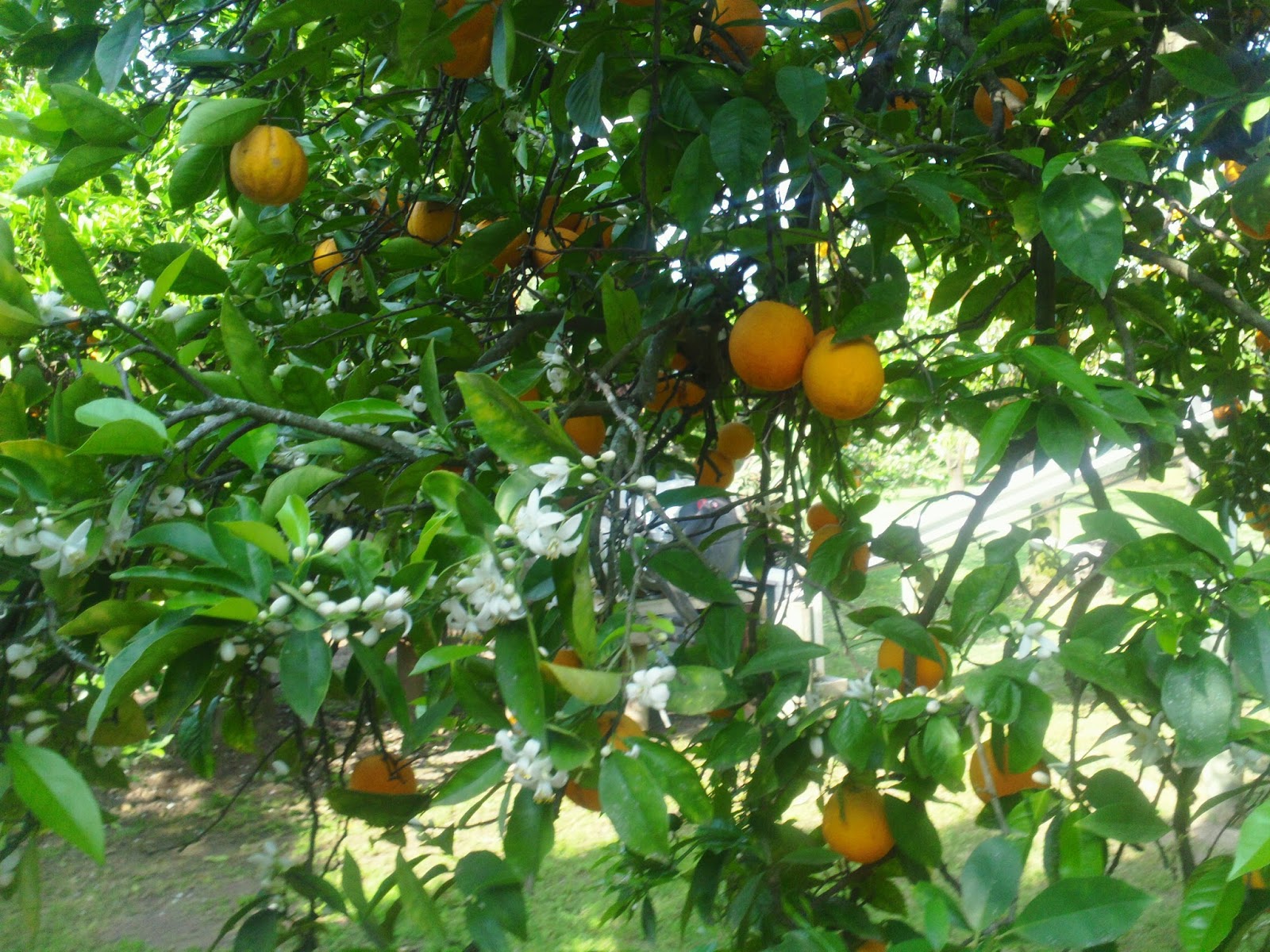
 Arriving at our hotel in Tofo. The whole Inhambane region (where Tofo is) of Mozambique is paradise. Palm, orange and coconut trees lined the road for almost the entire 10 hour bus ride. So by the time we climbed the sandy hill to our hotel, we were relieved. It helped that Mozambeat, our hostel, is paradise in and of itself. In my book, it's honeymoon material.


Our little house, which also had a private outdoor shower!

 Really obvious sexism. Obviously, sexism is something that impacts me most of the time, but I have a hard time remembering times where it was as obvious as it was in Mozambique. When I bought something my change would be handed to Thabo, I was given a smaller plate and a smaller glass for two separate meals (during both of which I was the only woman eating) and 9 times out of 10 when a local stopped to chat/try to sell something, they would be clearly talking to Thabo. Those kinds of moments that just make you go, “seriously?”.

The beach! Need I say more.


The Company! As always, it’s not what you do, but who you do it with.

we were joined by some of my other favorite volunteers, and their gameboys.

Khotso.
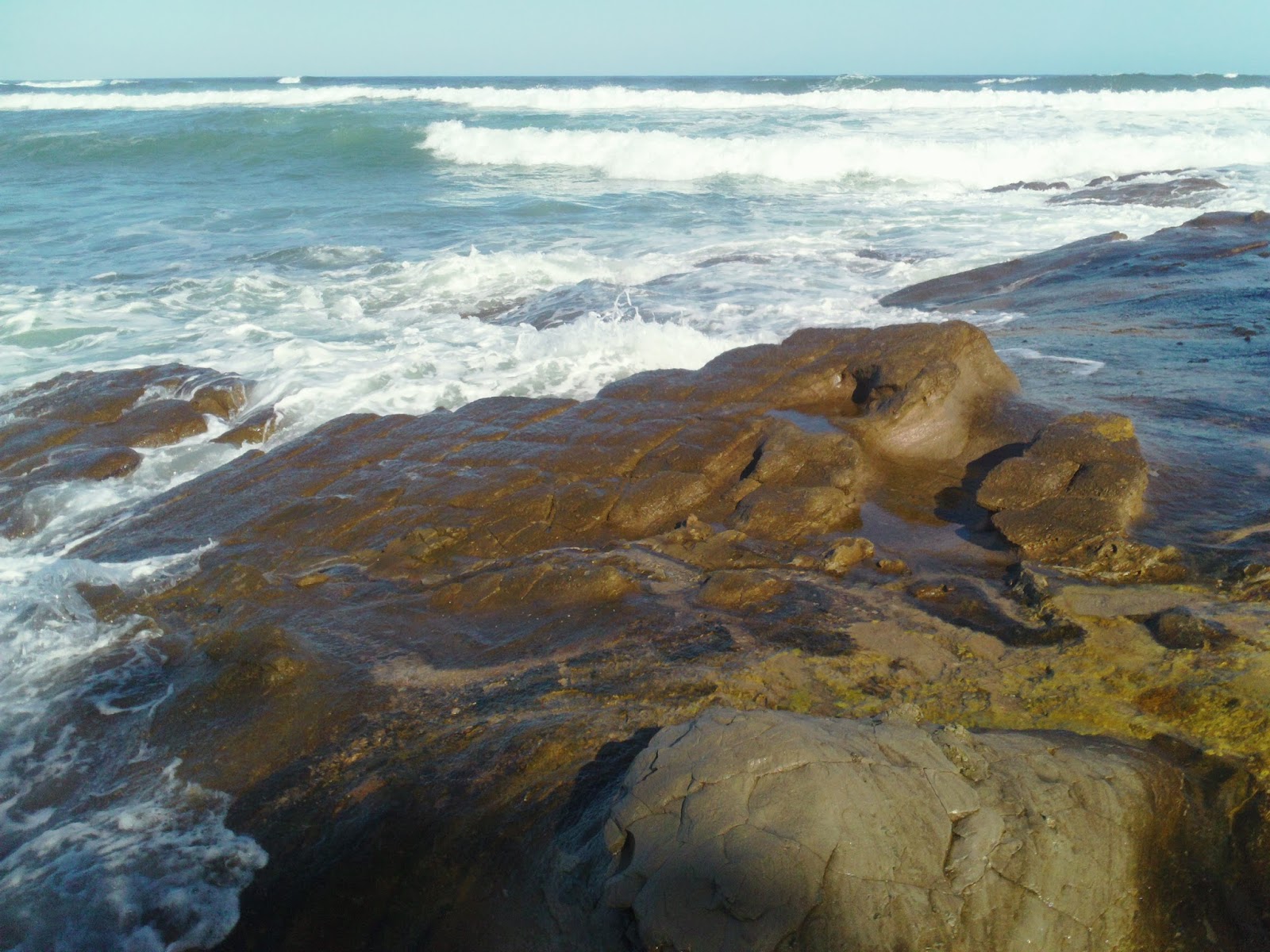
Goodnight Tofo. I'll be back.